

""
No facility listed.
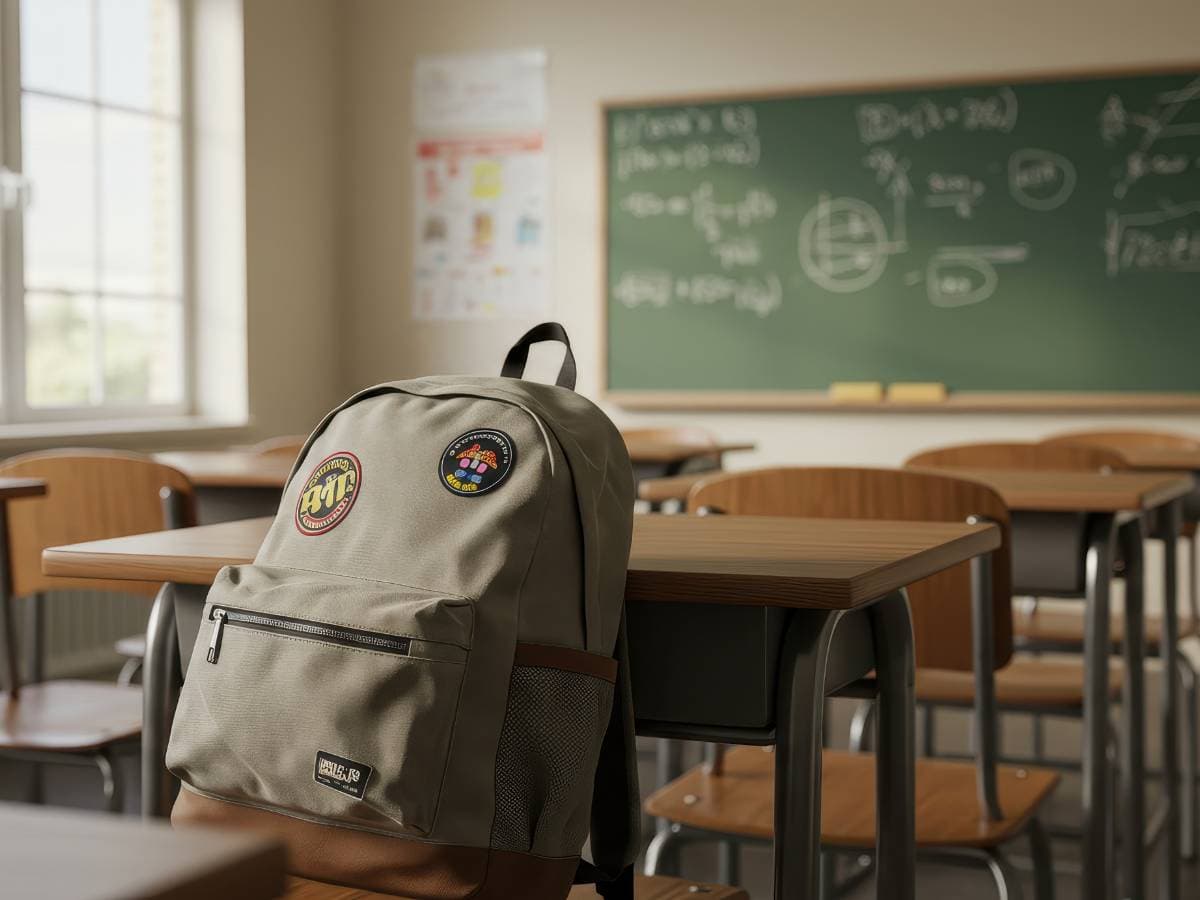
This mission aims to improve learning conditions in public schools in Touba, the holy city of Mouridism, supporting the efforts of the State and the community. The government has announced a plan to construct 332 schools and establishments for 111.2 billion FCFA, custom-designed to meet Touba's cultural and religious realities, with an emergency phase providing for 9 new schools and the rehabilitation or extension of 4 existing schools (5.4 billion FCFA). The needs are immediate. Serigne Abdourahmane Mbacké Elementary School in Darou Marnane, Touba's first public French school (1983), is the largest public elementary school in Senegal with 2,253 students. It operates on a double-shift system (28 teaching classes in 14 rooms, expanded to 18 rooms after the construction of four additional classes) and saw its courtyard flooded two weeks before the start of the school year, making its classrooms almost inaccessible; at least five schools were affected. Parents know that without a place in Touba, they will have to rely on more distant schools, such as those in Mbacké. Nationally, the Ministry of Education reported for the 2024-2025 school year over 7,000 temporary shelters, 5,862 unfenced schools, 2,256 without water points, and 7,033 without electricity. This mission mobilizes the diaspora to complement the State's plan: rehabilitation of roofs and walls, drainage against flooding, additional classrooms, desks and benches, sanitation facilities, water points, electricity, and fencing, starting with a limited number of priority schools.
View details →
This mission mobilizes the diaspora to increase the international influence of Touba, Senegal's second-largest city and the capital of Mouridism, which annually hosts over six million pilgrims for the Grand Magal, inscribed on the national cultural heritage list since 2025. The city has strong cooperation assets. In July 2026, the municipality of Touba Mosquée was selected among the pilot municipalities for Act 4 of decentralization, with state support for urban restructuring, access to housing, water, and sanitation. In 2025, it was chosen as a pilot municipality for a national training project for local government staff. International partners have already intervened: the Turkish agency TİKA equipped the emergency department of Ndamatou Hospital, the Global Green Growth Institute (GGGI) worked with the UCG on plastic waste management and a recovery center, and Matlaboul Fawzeyni Hospital was born from the mobilization of a diaspora dahira. The goal is to go further, while preserving the city's religious specificity: establish active decentralized cooperation partnerships with foreign cities (especially those with strong Mouride communities), facilitate access to international funding, promote the city's projects (water and sanitation, waste, health, mobility, education, heritage) to donors and investors, and provide technical support to the municipality in its pilot role.
View details →
Touba, Senegal's second-largest urban center with 1.12 million inhabitants, already boasts a strong entrepreneurial spirit: according to a study by the African Institute of Management, presented in July 2026 at the initiative of the Grand Magal organizing committee, 48.2% of active youth have created their own businesses, and eight out of ten entrepreneurs want to develop or diversify them. However, precariousness is widespread: 90.9% of active youth work in the informal sector, 94.9% without contracts or social protection, and 77.4% consider leaving the territory. Funding is the main obstacle (92.2% of entrepreneurs), and public schemes like DER/FJ are only utilized by 1% of them. According to DER/FJ, over 47% of young men in the department are unemployed, untrained, and outside the education system, in an economy dominated by trade and underdeveloped crafts. Training opportunities exist: in January 2025, 33 young people obtained a certificate in fruit and vegetable processing at the DAK training center in Touba, as part of the PFPE. The study proposes eight areas, including adapting training, access to funding, digital transformation, women's entrepreneurship, and recommends creating solidarity corridors between diaspora dahiras and those in Touba. This mission invites the diaspora to invest in impact businesses, mentor and train young project leaders, and open their business networks in Touba's promising sectors: agri-food processing, crafts, structured trade, recycling, transport and logistics, digital, and services.
View details →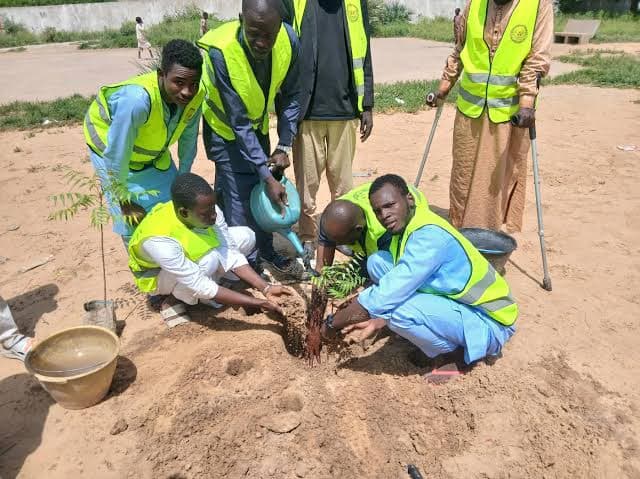
Touba, which can host up to five million people in two or three days during the Grand Magal, has a vital need for trees: shade, coolness, and infrastructure protection are essential there, as urbanization accelerates. Reforestation is already a tradition in the city. The Touba Ça Kanam association has been conducting proven campaigns for years: in 2024, it reforested a three-kilometer stretch from the heliport, with rigorous monitoring (monthly visits, daily watering, resident participation) which earned a 90% satisfaction rate from the Water and Forestry Department, and it planned to expand its nursery. In 2026, it launched the Naatal Touba operation, under the ndigël of the Khalife général, with approximately 200 Khaya trees planted over 1.5 km on the first day and a program set to continue in other areas and neighborhoods. The Minister of Environment praised the efforts of the city council and the association and recalled that the Diourbel region is the only one in Senegal without a classified forest. Young people from Touba also planted 150 trees in September 2026 in a public square and in schools, in the spirit of the 'Touba, Green City' project. This mission mobilizes the diaspora, including dahiras from abroad, to scale up: finance nurseries, seedlings, watering, and protection of young trees, share expertise in urban forestry and water management, mobilize climate financing, and extend plantations to the city's neighborhoods, schools, markets, and main roads.
View details →
Touba, which hosts millions of pilgrims during the Grand Magal, has already invested heavily in its lighting and electricity grid. Since 2019, the Touba Ça Kanam association has installed nearly 25,000 streetlights, thanks to voluntary contributions from disciples, launching an additional batch of 5,000 streetlights valued at 130 million FCFA in July 2025, and also contributing to network rehabilitation. The municipal support program (PACASEN) has modernized public lighting over more than 15 km and extended the network in villages like Touba Ndiligui and Kéré Ndao, for over six billion FCFA. For Magal 2026, Senelec invested 6 billion FCFA (14,000 poles, 32 electrical substations), and the mayor announced that several thousand lamps have been installed or replaced in neighborhoods. The challenge now is sustainability and cost: the mayor has requested support to equip public buildings and health facilities with solar energy to reduce the municipality's electricity bill. This mission mobilizes the diaspora, including dahiras abroad, to accelerate Touba's energy transition: solar with storage for health facilities, schools, and public buildings, conversion of lighting to quality LED and solar with remote management, maintenance and training of a team of local technicians, energy security during Magal and floods, and mobilization of climate financing to replicate the model in neighborhoods.
View details →Touba is the second largest city in Senegal by population after Dakar. The mayor reports 100,000 to 120,000 declared births each year in the municipality. Neighborhoods affected by floods during the rainy season (Ndamatou, Ocass, Nguélémou, Keur Niang) need active local organizations for sanitation and prevention. Access to drinking water relies on a network of boreholes managed notably by ASUFORs (borehole user associations). Water quality varies by area, and some boreholes show high fluoride levels. In villages attached to the city (Ndindy, Darou Karim, Sam), priorities are water, sanitation, and basic services. Young people have a strong entrepreneurial spirit. Nearly one in two active young people has created their own business, but over 90% work in the informal sector, and only 14.6% have received vocational training. Daaras, dahiras, training institutes (Institut Al Azhar, CFPT DAK), and neighborhood associations play a key role in education, health, solidarity, and integration. The diaspora is already a lever for funding and networking.
View details →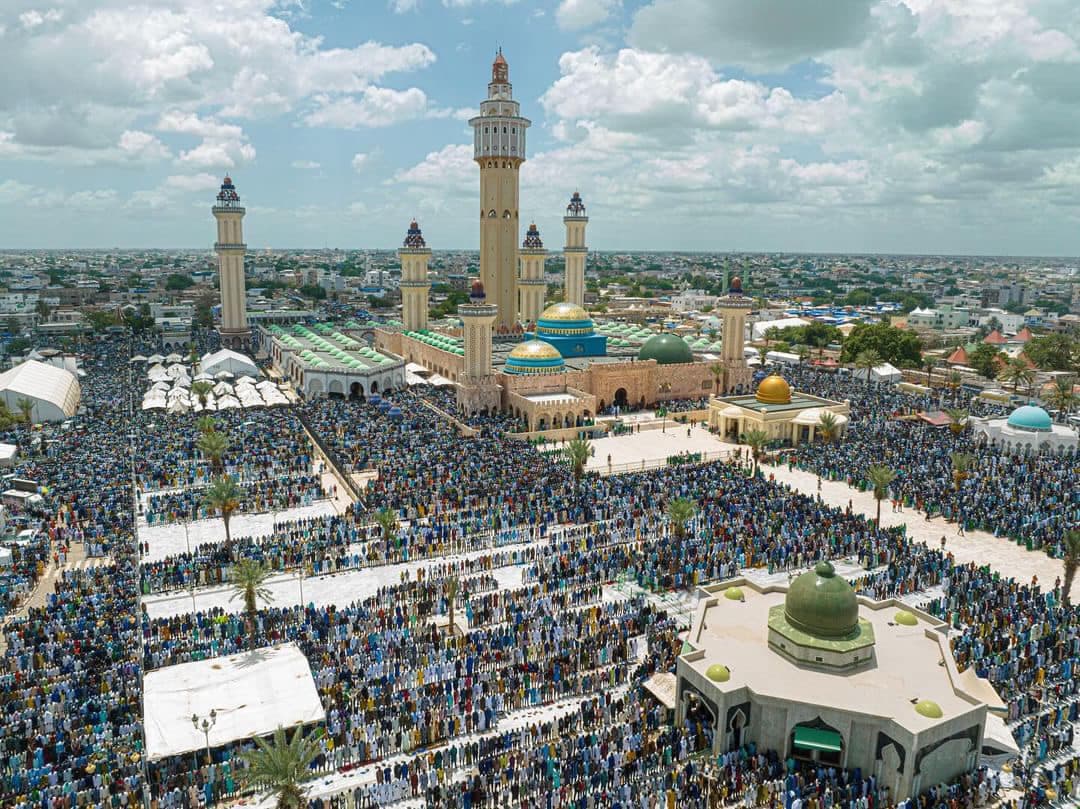
Touba, the capital of Mouridism, hosts the Grand Magal every year, commemorating the exile of Cheikh Ahmadou Bamba in 1895. The 132nd edition, on August 2, 2026, gathered millions of faithful, following 6.5 million visitors last year, and took place in the middle of the rainy season. Since 2025, the Magal has been listed on the national cultural heritage list to be safeguarded and promoted. Beyond its spiritual dimension (prayers, recitation of the Quran and Khassaïdes), it is an economic driver: direct and indirect transactions are estimated at over 250 billion FCFA, according to the president of the culture and communication commission of the organizing committee, who also highlights the Cheikh Ahmadou Khadim Academic Complex (37 billion FCFA, 1,280 students, 40% of whom are women). The organization relies on a committee under the direction of the General Khalife, on the State (137 needs identified this year), and on the dahiras, which organize travel, accommodation, and catering for their members. In July 2026, the Head of State announced a 60 billion FCFA program for Touba, with water and sanitation as priorities. This mission mobilizes the diaspora, including dahiras abroad, to enhance this living heritage without affecting its spiritual dimension: documentation and digitization of heritage (manuscripts, Khassaïdes, oral memory), multilingual information and digital tools for visitors, reception, mobility, and health services, respectful cultural tourism, and partnerships with cultural and academic institutions abroad.
View details →
Touba is one of Senegal's most populous cities, and its health system must meet both the needs of its residents and the influx of millions of pilgrims during the Grand Magal. The Touba health district serves nearly one million inhabitants, with a reported deficit of health centers, health posts, and personnel by the Diourbel medical region. Hospital services rely on two establishments. Matlaboul Fawzeyni Hospital, the city's first level 3 hospital, was born from the mobilization of a Mouride dahira from the diaspora, which raised the funds (6 billion FCFA) to build a 200-bed hospital before entrusting it to the State in 2005; a new 140-bed medical unit brings its capacity to 340 beds and 11 operating rooms, with a maternity ward and two blocks for obstetric emergencies. Ndamatou Hospital inaugurated on January 8, 2026, an emergency and reception department with 14 beds (equipped by the Turkish agency TİKA), a resuscitation unit, a modern laboratory, and a blood bank; its emergency department received over 22,000 patients in 2025, and a hemodialysis center is to be built by the Touba Ca Kanam organization. Difficulties remain: Ndamatou staff reported the absence of an ambulance, a broken scanner, and an undersized hospital facing the influx of patients during the Magal. This mission mobilizes the diaspora, in continuation of this historic commitment, to strengthen local health posts and centers, maternal and neonatal health, emergency services and ambulances, imaging and biomedical maintenance, staff training, and health preparedness for the Magal.
View details →
Touba, which has grown from 30,000 inhabitants in 1970 to nearly a million today, faces a major mobility challenge, both daily and during the Grand Magal. A university study already described chaotic traffic, with nearly 15,000 carts on the roads, the primary cause of accidents and traffic jams. During rainy periods, roads deteriorate, drivers from the Niarry Pneu bus station take detours, and taxi fares increase from 100 to 200 FCFA. During the Magal, pressure is at its peak: according to a working document, firefighters recorded 341 accidents, 982 victims including 29 deaths for nearly 236,000 vehicles in four days, exacerbated by old vehicles, overloaded buses, and the absence of dedicated emergency lanes. Solutions are being implemented: Magal 2026 Mobility Management Plan (alternating one-way traffic on the Ila Touba highway and RN3, logistics curfew for heavy transport), road rehabilitation by Ageroute, relaunch of the train on the Mbacké-Touba-Ngabou axis, maintained after the Magal for students and pilgrims, and maintenance of secondary roads by the city council and the Touba Ça Kanam association. The report behind the plan aims to make the Magal a full-scale test of Touba in 2040. This mission mobilizes the diaspora to complement these efforts: secondary roads and drainage, modern shuttles and buses, freight transport alternative to carts, road safety, digital traveler information, electric and solar mobility, in consultation with transporters.
View details →Local authority
No document available
