

""
No facility listed.
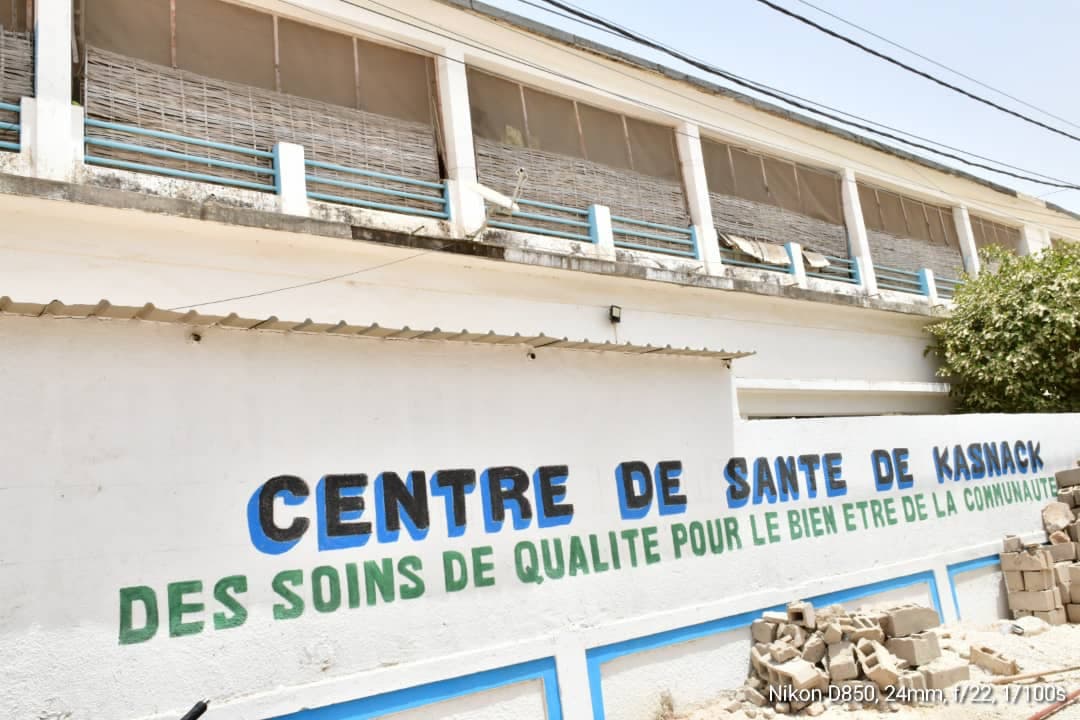
Kaolack is the reference health hub for central Senegal. The El Hadji Ibrahima Niass Regional Hospital Center (CHREIN) serves patients from the municipality, as well as from the regions of Kaolack, Fatick, Kaffrine, Diourbel, Tambacounda, and even Gambia. In its first months, its emergency department received 60 to 70 patients per day, 40% of whom came from outside the municipality, and nearly three-quarters were trauma cases, mainly road accidents. Its director describes a century-old hospital, which has grown very large and could aspire to Level 3 status: some buildings, such as the internal medicine ward, date back to 1922, and precarious staff need better support. Solutions are being implemented. In August 2026, the Minister of Health announced the ambition to build a Level 3 hospital in Kaolack, praised the improvement of CHREIN's technical facilities (notably the operating theater), announced the renewal of surgical equipment, dental equipment, and care materials for the Médina Baye health center, and the finalization of the Gandiaye and Kasnack health centers. The city must also ensure annual health coverage for the Gamou of Médina Baye, which gathers considerable crowds. This mission mobilizes the diaspora to complement these efforts: equipping and renovating CHREIN and local health centers, strengthening emergency services, surgery, and maternal health, biomedical waste management, biomedical maintenance, staff training, and health preparedness for large gatherings.
View details →
Kaolack, a major crossroads city in central Senegal, is known for its commerce and for hosting pilgrims in Médina Baye during the Maouloud. According to a study on Franco-Senegalese twinning, the city is twinned with Mérignac, near Bordeaux (France), and the Departmental Council of Kaolack has formalized a partnership with the German municipality of Osterode am Harz. This partnership originated from linguistic exchanges between the Valdiodio Ndiaye high school in Kaolack and the Tilman-Riemenschneider high school in Osterode, which led to the construction of a multimedia room in Kaolack. The mayor of Osterode also asked his Kaolack host to be Kaolack's ambassador to the State of Hanover to broaden cooperation. Local actors are already inviting the Kaolack diaspora to get involved, particularly during the "Setal sunu rééw" citizen mobilization days. These partnerships remain largely invisible and would benefit from being revived, expanded (education, sanitation, health, commerce, culture), and better funded. This mission mobilizes the diaspora to consolidate these partnerships, identify new partners (twin cities, universities, businesses, donors), facilitate access to international funding, and promote the city's projects.
View details →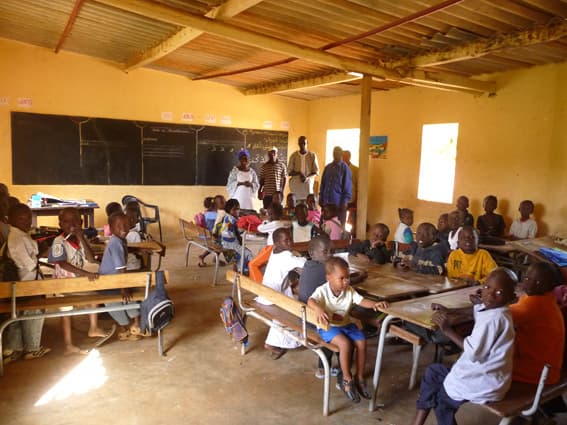
This mission aims to improve learning conditions in public schools in Kaolack, a city in central Senegal regularly affected by floods. As the 2026-2027 academic year approaches, the Academic Inspectorate indicated during a Regional Development Committee meeting that 35 schools were submerged, 64 others required rehabilitation work, and there was a deficit of 9,500 desks and benches. CEM Moustapha Ndiaye and Lycée Valdiodio Ndiaye were among the establishments to be rehabilitated, and the academic inspector called on municipalities and the Departmental Council to build housing for caretakers to secure the schools. The problem is recurrent: during a previous academic year, schools in the commune such as Dialagne, Ngane, and Fass Cheikh Tidiane still had their courtyards invaded by stagnant greenish water and mosquitoes, with 23 establishments submerged, and the region's deputy advocated for the rehabilitation of CEM Valdiodio Ndiaye, CEM Moustapha Ndiaye, and the Franco-Arab high school of Sahm, which still operates with temporary shelters. Citizen mobilization exists: in October 2024, the president of the Saloum Sports Association donated cleaning equipment and cleaned the Guédel Mbodji school, one of the first in the city. This mission mobilizes the diaspora to complement the efforts of the State and local authorities: drainage and backfilling against floods, rehabilitation of roofs, walls and ceilings, replacement of temporary shelters, desks and benches, sanitation facilities, water points, fences, and caretaker housing, in priority schools identified with the commune and the inspectorate.
View details →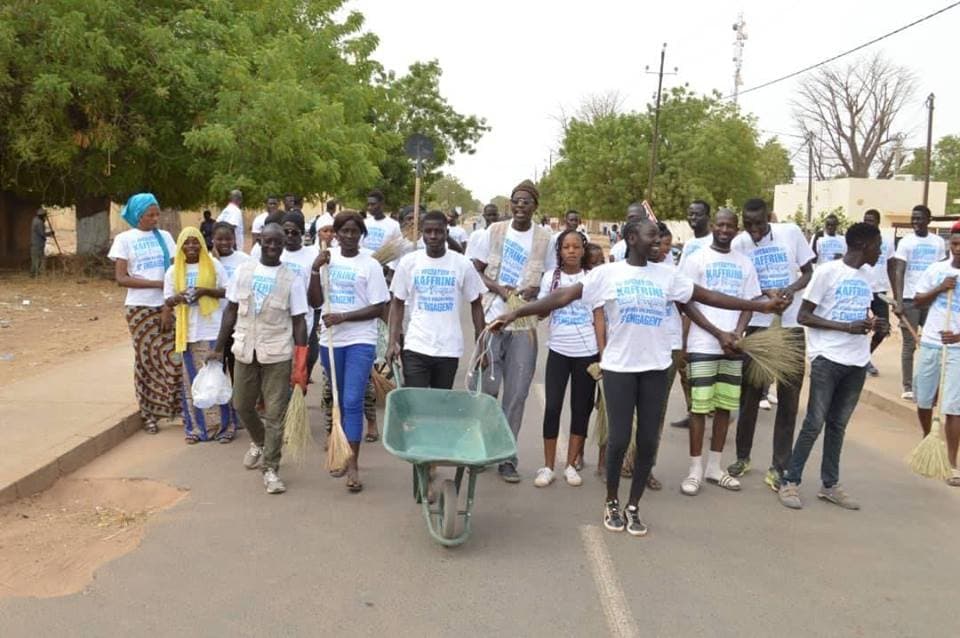
Kaolack, a major crossroads city in central Senegal, faces significant pressure regarding its cleanliness: highly frequented markets, reception of pilgrims in Médina Baye, transit of travelers, and a nearby water table that exacerbates flooding. There are substantial needs for waste evacuation, canal clearing, and sanitation. The "Setal sunu rééw" days bring together the city council, SONAGED, defense and security forces, transporters, and residents: the 9th edition (February 1, 2025) targeted the Fass Cheikh Tidiane, Médina Baye, and Médina Mbaba neighborhoods, as well as cemeteries, markets, and a regional health post. SONAGED launched the "Koor Set" cleaning operation in Kaolack during Ramadan and mobilized about a hundred agents and six garbage trucks in Médina Baye before Maouloud 2026. Citizen initiatives complement these actions: the promoter of the Kaolack 72-hour Festival, El Hadji Fallou Kébé, provided bins, brooms, and wheelbarrows for these days, 200 modern bins for the central market, and cleaning equipment to the Regional Urban Planning Division. He invited the Kaolack diaspora to support these days. Remaining challenges include the absence of a landfill or technical waste disposal center (approximately 125 tons of waste per day according to a local actor), regular waste evacuation in markets, and waste valorization, with a power plant project at the Latmingué site announced by Senelec and SONAGED. This mission mobilizes the Kaolack diaspora to finance bins, equipment, and vehicles, support awareness campaigns, invest in sorting, valorization, and recycling, and provide expertise in waste management.
View details →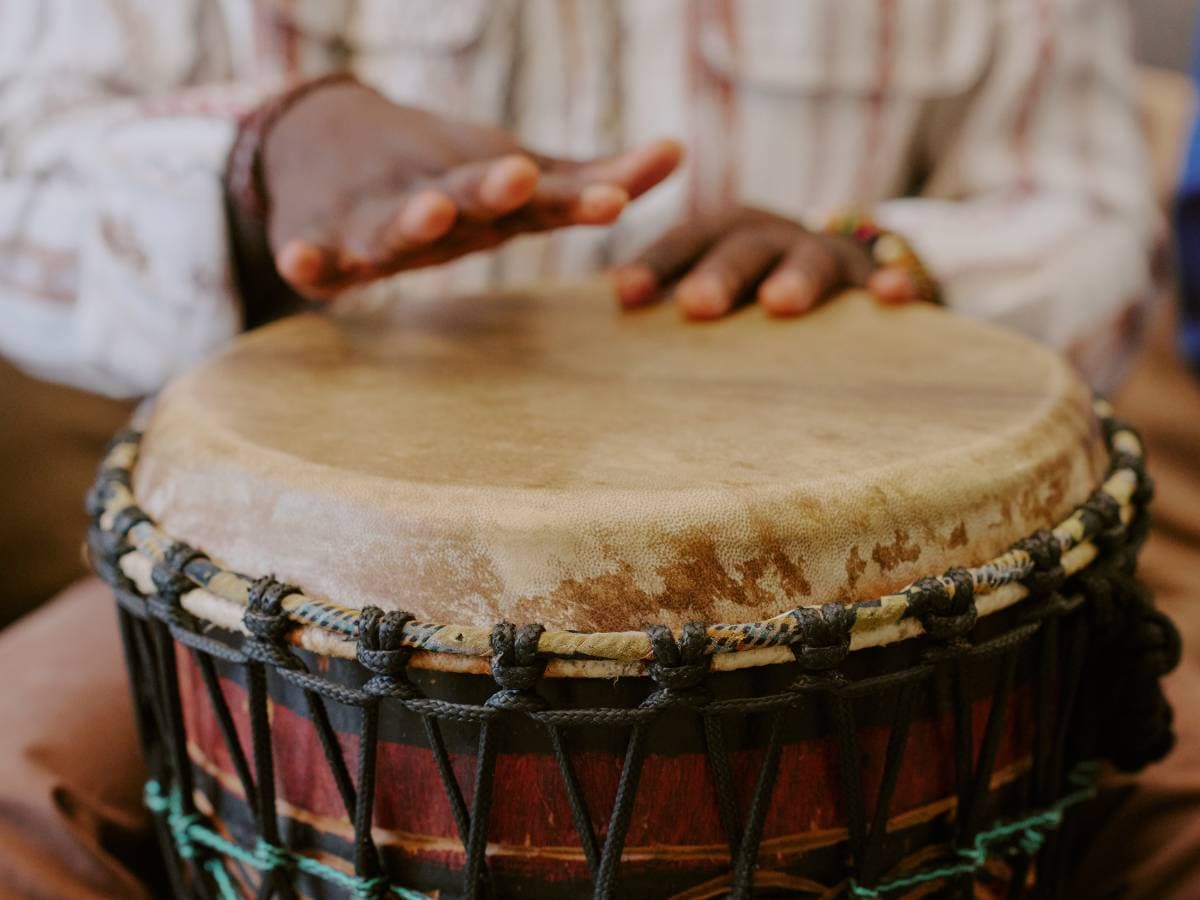
Kaolack, a crossroads of Saloum, possesses a vibrant cultural heritage: Ngoyaan (or Ndaga), a traditional musical style from Saloum blending Mandingo songs and dances, is inscribed on the national representative list of intangible cultural heritage. Several events already animate the city. The International Festival "Les voix du Sine-Saloum" (FESIVOS) held its second edition from December 2 to 8, 2024, at the Kaolack cultural center, involving the cultural centers of Kaffrine, Fatick, and Kaolack, focusing on cultural diversity and the history of traditional music, with the "nights" of Sine, Ndoucoumane, and Saloum, and a symposium. The "72 heures du Sine-Saloum," initiated by El Hadj Fallou Kébé, brought together communities and the "Bour" of Sine and Saloum in traditional costumes on the city center esplanade, with a project for a foundation for culture, sport, economy, and environment of Sine-Saloum. The Senegalese Tassou Festival (Festass) annually gathers generations of musicians, rappers, and poets, and artists advocate for a regional orchestra. The city also has heritage to promote: the Great Mosque of Médina Baye, the Valdiodio Ndiaye high school classified as historical heritage, the former disused courthouse, the craft village, and the Leisure and Culture Park. These initiatives remain fragile and little known internationally. This mission mobilizes the diaspora to structure, finance, and internationalize Kaolack's cultural events, promote Saloum's heritage, and transform them into levers for influence, cultural tourism, and employment for young artists.
View details →
In Kaolack, urban mobility largely relies on "Jakarta" motorcycles, which first appeared in the city before spreading to Thiès and then Dakar. They have become a means of economic survival for many young people and a response to public transport shortcomings, with over 500,000 motorcycles estimated nationwide, for which the Ministry of Transport is undertaking regulation of unregistered bikes. However, this system comes at a cost: accidents involving motorcycles are frequent in Kaolack and its region, such as in May 2024 in Ndargoundao or in June 2026 on the Thiawando-Koutal axis, where three motorcycles were hit, with victims evacuated to the regional hospital. Other modes are fragile: during the transporters' strike in March 2026, the city's five taxi garages ceased operations, and users had to resort to carts and Jakarta motorcycles at higher prices, while urban taxi drivers reported waiting five years for their licenses. Secondary roads are narrow, and the installation of iron barriers along their sides raises concerns among drivers, who are requesting widening and emergency lanes. This mission mobilizes the diaspora to support a mobility plan adapted to Kaolack: driver training and equipment (helmets, insurance), digital motorcycle registration, electric motorcycles and tricycles with solar charging, modernization of taxis and garages, urban minibuses, booking applications and mobile payment, improvement of secondary roads, in consultation with drivers and unions.
View details →
Kaolack, the capital of the groundnut basin and a major trading city, hosts the FIKA fair (8th edition in 2024), organized with the Chamber of Commerce, Industry, and Agriculture, which promotes regional entrepreneurs and businesses. In February 2026, the TAGDev 2.0 project was launched in Kaolack to reach 20,000 young people and women from five communes in the groundnut basin, focusing on groundnut and onion value chains and strengthening agricultural universities. DER/FJ has invested 9.9 billion FCFA in the region, and PROVALE-CV has created 3,182 jobs there, including 1,300 for young people. The Food Technology Institute trained 208 people in agribusiness in Kaolack with PDCEJ, and 26 young people were certified in oil and gas professions at the El Hadji Abdoulaye Niasse technical and commercial high school. In January 2026, the "Fora rural Invest" brought together public actors and the Chamber of Commerce to improve rural youth's access to support, financing, and marketing, as this access remains limited. A Youth and Women's Employment and Entrepreneurship Hub, which includes ANPEJ, DER, and 3FPT, has existed in Kaolack since 2021. This mission mobilizes the Kaolack diaspora to invest in impact businesses (groundnut and onion agro-processing, trade, digital technology, services), transfer skills, and open business networks to serve youth and women's employment.
View details →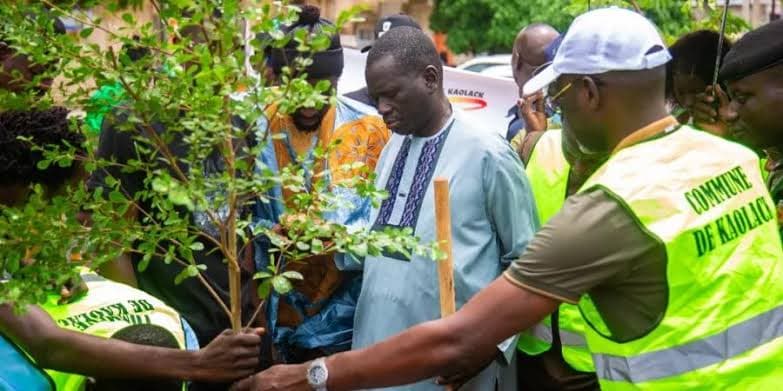
Kaolack, a city in the groundnut basin, needs more trees for shade, coolness, and adaptation to climate change. The national reforestation campaign 2026 was launched on August 9th in Darou Salam (Nioro du Rip, Kaolack region), with the theme "From seedlings to trees: responsibility to communities". The government announced a challenge for local authorities, which will distinguish those that maintain and ensure the survival of their trees, and the "One Commune, One Nursery" program to create green jobs for youth and women. In Kaolack, the departmental living environment service is preparing the "Natal Saloum" program, which plans to plant several hundred trees with a monitoring system to ensure their growth. In August 2025, an ecological caravan led by the Minister of Environment planted 2,600 seedlings in Kahone, Médina Baye, Koutal, and Pané Abdoulaye. Other stakeholders are involved: the Amazones du Saloum association donated 1,000 seedlings, student associations from neighboring communes like Latmingué are planting in schools (targeting at least 10 trees per institution), and a "Green Kaolack" project, supported by the Navétanes movement, aimed for 10,000 trees in the city. The challenges remain the survival of seedlings (68% national survival rate for the 2024 campaign), watering, protection, and maintenance. This mission mobilizes the Kaolack diaspora to finance seedlings, watering, communal nursery, and protection, provide expertise, and foster partnerships with NGOs and youth and women's associations.
View details →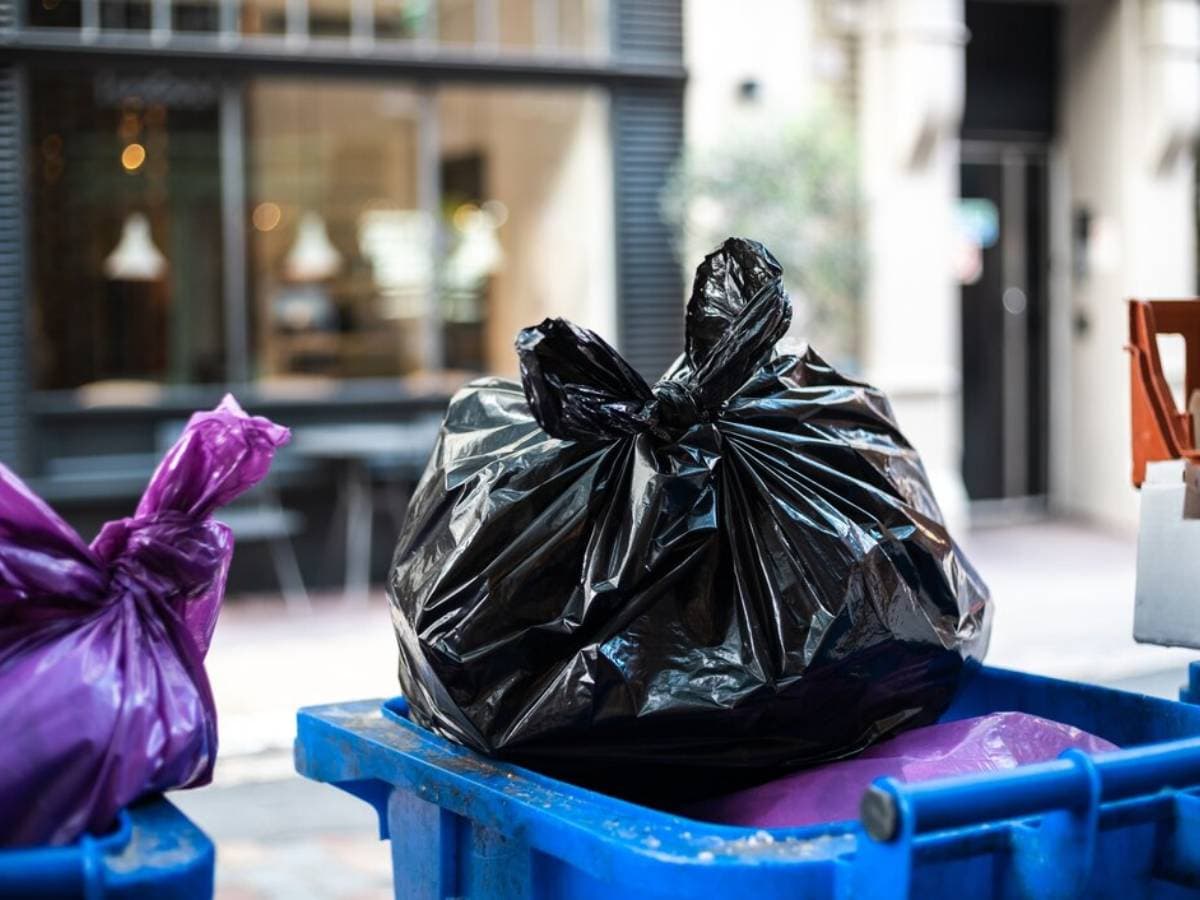
Kaolack, a major commercial city in central Senegal, is modernizing its neighborhoods through the Urban Modernization Program (Promovilles): over 13 billion FCFA invested in the municipality for 12.87 km of sanitized and lit roads, serving more than 12 neighborhoods (Koundam, Touba Ndorong Ocass, Tabangoye, HLM Sara, Dialègne, Ndangane).A 4.2 km road project, costing 2.8 billion FCFA, includes 160 solar streetlights, with gutters, drains, and a permeable road surface.The municipality was part of the PRODERE pilot phase for solar lighting. Nationally, however, ANER's solar public lighting program is behind schedule: only 6,334 streetlights were installed in the first quarter of 2026 against a target of 45,000.The city has adopted a "Kaolack 2050" vision, with estimated investments of 967.9 billion FCFA, prioritizing public lighting, sanitation, and living environment. Funding still needs to be mobilized.In the face of electricity outages reported nationwide in 2026, solar and energy-efficient lighting are levers to reduce the municipality's bill and gain resilience.This mission mobilizes the Kaolack diaspora to invest in solar and lighting for uncovered neighborhoods and public buildings (city hall, schools, markets, health centers), provide technical expertise, transfer skills, and connect the city with funders.
View details →Local authority
No document available
